

Commentary
Rym Momtaz, ed.
{
  "authors": [
    "Rym Momtaz"
  ],
  "type": "commentary",
  "blog": "Strategic Europe",
  "centerAffiliationAll": "",
  "centers": [
    "Carnegie Endowment for International Peace",
    "Carnegie Europe"
  ],
  "englishNewsletterAll": "",
  "nonEnglishNewsletterAll": "",
  "primaryCenter": "Carnegie Europe",
  "programAffiliation": "",
  "regions": [
    "Europe",
    "France",
    "United States"
  ],
  "topics": [
    "EU",
    "Foreign Policy",
    "Defense",
    "NATO"
  ]
}
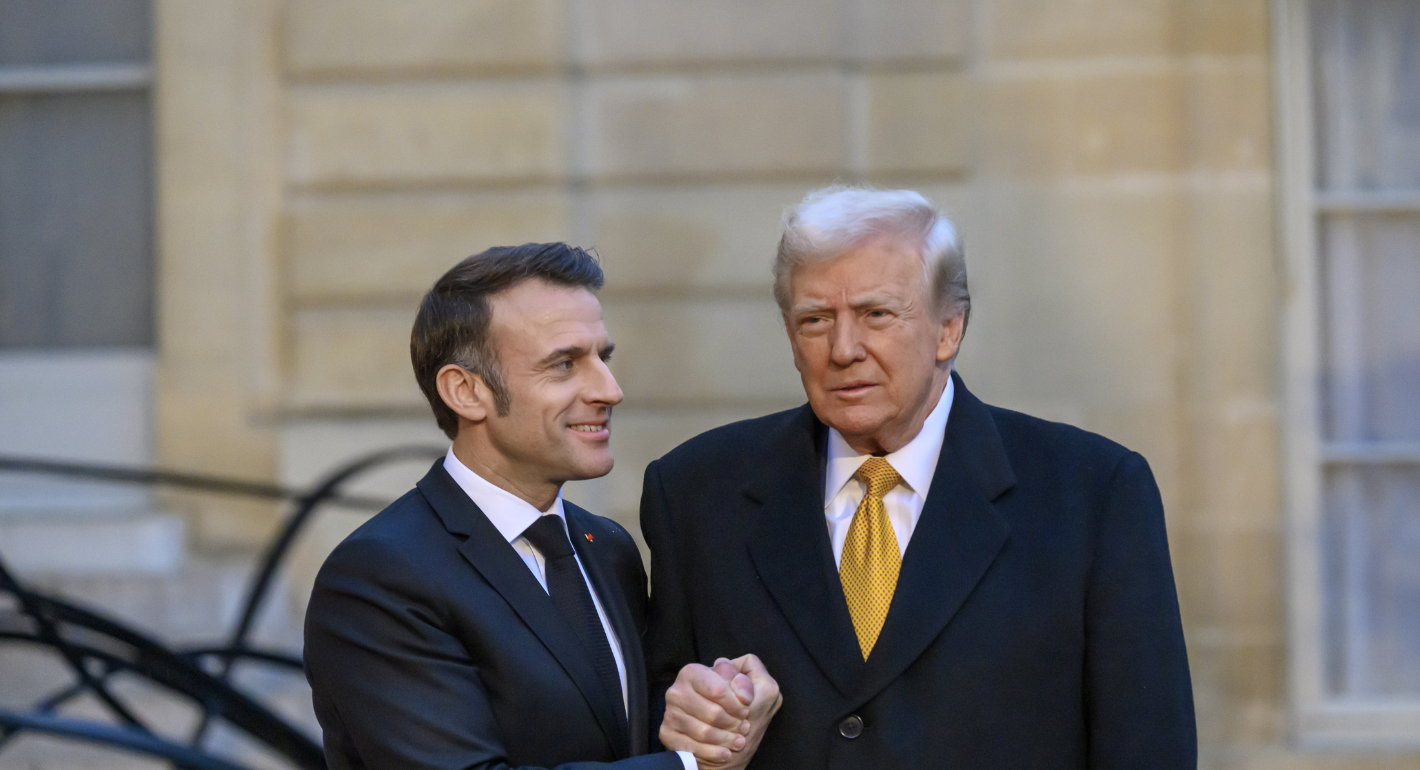
Source: Getty
Donald Trump’s repudiation of NATO goes against the Make America Great Again vision of a U.S.-centered foreign policy. If the goal is to preserve the alliance by boosting Europe’s commitments, leaning into France’s vision is the most America First way forward.
It has now become a bit of a habit. When things aren’t totally going his way on a foreign policy issue, U.S. President Donald Trump will berate NATO and dunk on allied leaders, with France and its President Emmanuel Macron his favorite targets.
With his war of choice against Iran experiencing headwinds, Trump has been at it again. Over the past few days, he has called NATO a “paper tiger” and “disappointing,” and has repeated previous statements that the United States will no longer protect its allies—words that have certainly been welcomed in Russia. He has also attempted to humiliate Macron by making disparaging comments about his marriage, while conservative voices have accused France of surrendering to the blackmail of China, Russia, and Iran.
This time, the triggering offense was the refusal of allies to try to forcibly dislodge the control Iran has been imposing over navigation through the Strait of Hormuz as a result of Trump’s war. Never mind that no part of that assignment falls within NATO’s mission or founding articles. Or that Trump never consulted the allies and—if anything—the war he launched on Iran violates the first article of the treaty.
Beyond the vitriolic France-bashing that has proliferated in some quarters of American conservative media and online, this fixation is an objectively self-defeating position. No ally is closer than France to the America First defense policy—insofar as there still is a cogent one that aims to considerably reduce U.S. commitments to Europe’s conventional deterrence.
If Trump’s goal is to durably shift the bulk of the burden of allied security onto Europeans, and not simply set the alliance on fire and hand a decisive free victory to China or Russia, then Macron should be his best friend.
Admittedly, that would require Paris to find a way to overcome the country’s budgetary crisis and industrial shortcomings. Only in tackling those issues will France be able to match its strategic culture and political vision with the volume and type of capabilities required in a sustained high intensity conflict like the one in Ukraine. It would also require that Trump accept a commonsense consequence of his desire to downgrade America’s engagement in Europe: lower exports of U.S. weapons to the continent.
To be sure, no full military uncoupling of Europe and the United States is possible in the short run. But that is not—nor should it be—the desired goal.
The shortcomings of NATO allies in Europe are well-documented. It is a fact that Trump has been instrumental in finally getting many European allies to understand that their low defense budgets are no longer commensurate with the demands of the threat environment. Their unwillingness to take action without the United States in Ukraine—their own backyard—is also no longer sustainable. On both of these issues, the majority of allies are making strides.
And this is where France can continue being helpful. Macron has long advocated for European allies to build more conventional capabilities to better defend themselves and rely less on the United States. There has certainly been some measure of self-interest in expanding the market share of the French weapons industry, but that in itself isn’t a bad element. Washington—under both Democrats and Republicans—has taken a misguided zero-sum view on this. The American defense industry can no longer fulfil all the demand generated by the new world disorder, as demonstrated by the delays in deliveries of Patriot missiles to Switzerland. A bolstered European defense industry—in France, the UK, Germany, Sweden, Italy, Poland, and others including Ukraine—would only strengthen the West’s defenses.
Contrary to portrayals of France as a kinetically shy ally, Macron has also shown his willingness to push the envelope at the expense of making his European partners uncomfortable. In Ukraine, he was the first to break the taboo and send armored fighting vehicles. Along with the UK, France was also the first to send deep strike capabilities. Paris’s attempt to build a coalition of the willing that would deploy troops within Ukraine as a security guarantee has faced some challenges—including from Washington—but it may yet prove to be useful.
Beyond Europe, France has been a reliable partner to the United States. It was one of the most committed allies to the fight against the so-called Islamic State, and has led counter-terrorism operations in Africa, where it shares interests with Washington. It also contributes to maintaining freedom of navigation in international waters, namely in the South China Sea.
And on Iran in particular, Macron and Trump have long shared the view that Tehran’s ballistic missile program and malign regional activities needed constraining. It was Macron who, in 2019, came closer than anyone to brokering an in-person negotiation in New York between Trump and the then Iranian president Hassan Rouhani on the margins of the UN General Assembly.
In this current war, Paris has in fact—like most of the alliance—pulled up its sleeves, setting aside misgivings about the legality of the war or the disproportionate impact that this unilateral American action will have on the economy. French assets have been defending Gulf countries like the United Arab Emirates or Qatar against Iranian attacks, while the entire continent has been transformed into America’s logistical hub.
Trump’s repeated attacks on NATO as a whole and allies individually, his plans to annex Canada and Greenland (an autonomous Danish territory), in addition to his explicit undermining of the mutual defense pact that lies at the core of the alliance, may have already done irreparable damage. The White House meeting set for April 8, 2026, between NATO Secretary-General Mark Rutte and Trump might be the time to start preparing the ground to address elephant in the room.
The alliance’s next summit in July 2026, in Ankara, cannot be geared once again toward placating Trump instead of tackling the alliance’s fundamental crisis of existence head on.
If the United States doesn’t have the NATO it wants, it’s also because of its own behavior. Washington and its allies must come together and honestly discuss whether they all want the alliance to persevere, and if so, what structural changes they all need to make to that end.
Subscribe to Strategic Europe, delivered to you weekdays!

Editor in Chief, Strategic Europe
Rym Momtaz is the editor in chief of Carnegie Europe’s blog Strategic Europe. A multiple Emmy award-winning journalist-turned-analyst, she specializes in Europe and the Middle East and the interplay between those two spaces.
Recent Work
Rym Momtaz, ed.
Rym Momtaz
Carnegie does not take institutional positions on public policy issues; the views represented herein are those of the author(s) and do not necessarily reflect the views of Carnegie, its staff, or its trustees.
Hungarians head to the polls on April 12 for an election of national and European consequence. Three different outcomes are on the cards, each with their own implications for the EU.

Zsuzsanna Szelényi
The far right failed to win big in France’s municipal elections. But that’s not good news for the country’s left wing, which remained disunited while the broader right consolidated its momentum ahead of the 2027 presidential race.

Catherine Fieschi
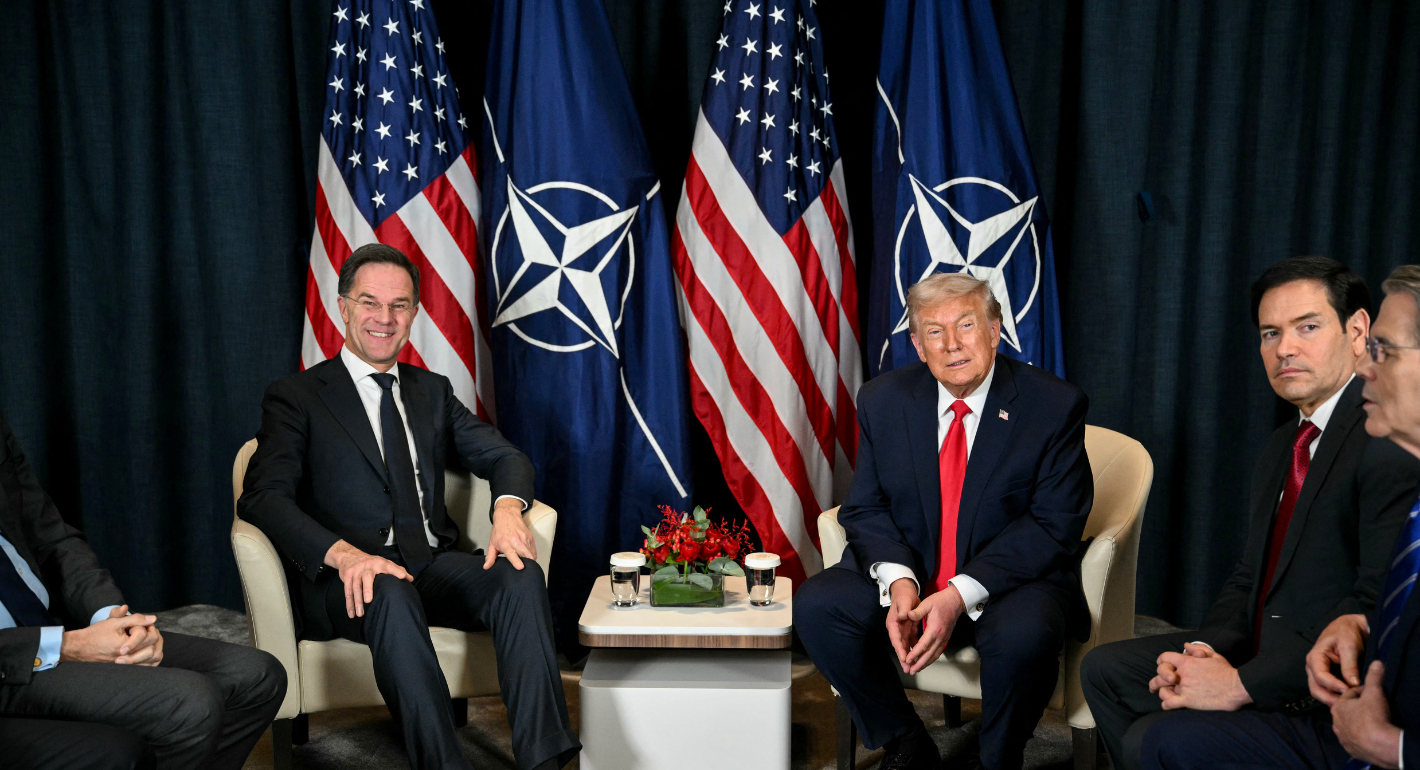
Donald Trump has demanded that European allies send ships to the Strait of Hormuz while his war of choice in Iran rages on. He has constantly berated NATO while the alliance’s secretary-general has emphatically supported him.
Rym Momtaz, ed.
The EU is structurally incapable of reacting to today’s foreign policy crises. The union must fold the EEAS into the European Commission and create a security council better prepared to take action on the global stage.

Stefan Lehne
The war in Ukraine is costing Russia its leverage overseas. Across the South Caucasus and Middle East, this presents an opportunity for Europe to pick up the pieces and claim its own sphere of influence.

William Dixon, Maksym Beznosiuk